The Single Tooth Bending System is designed for testing SAE 1619, FZG Type C, and other proprietary gear designs by applying load to a single tooth. This system is essential for studying the effects of different materials, heat treatments, and other factors, while also enabling the generation of S-N curves.
With its impressive 140 kN maximum force capacity, the system supports both static single-tooth fracture tests and dynamic fatigue tests. Dynamic tests can be conducted at frequencies of up to 75 Hz and loads reaching 90 kN, making it a versatile solution for comprehensive testing.
Key Features:
- Maximum Force Capacity: 140 kN
- Static Testing: Single-tooth fracture tests for material and design analysis
- Dynamic Testing: Fatigue tests at frequencies up to 75 Hz and loads up to 90 kN
- Essential for Gear Development: Critical for the automotive industry, defense platforms, and wind turbine systems
The Single Tooth Bending System plays a pivotal role in the development of reliable gears for high-demand applications, ensuring optimal performance under real-world conditions.
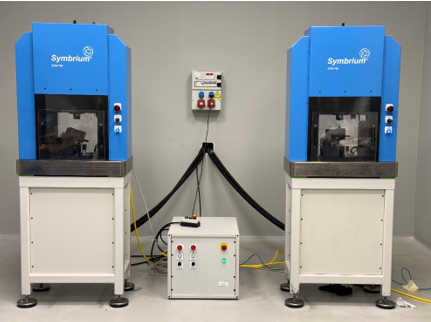
Figure 1. Single Tooth Bending System
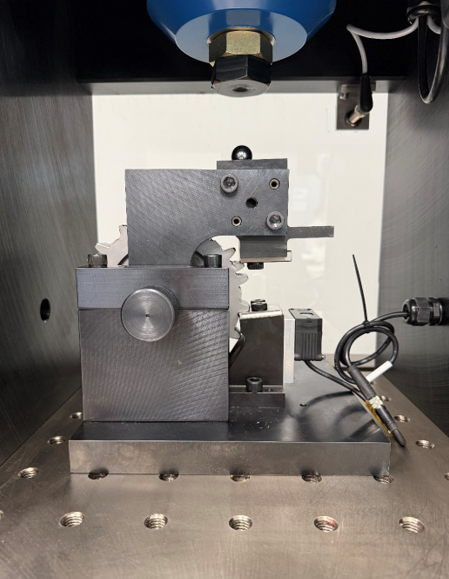
Figure 2. Single Tooth Bending System
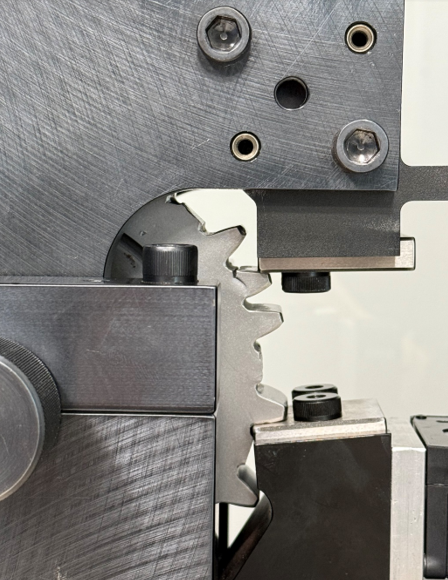
Figure 3. Single Tooth Bending Fracture
High-Speed Camera Testing Capabilities
The high-speed imaging infrastructure analyzes the operational moments of mechanical systems and complex structures at the millisecond scale.
Technical Specifications
Powered by the FASTCAM NOVA S20, the testing environment provides highly precise visual data collection for engineering analysis:
- Capable of recording up to 1.1 million frames per second.
- Tracks structural deformations, crack initiations, and damage mechanisms with microsecond precision.
- Maintains necessary light sensitivity and resolution to record dynamic characteristics under difficult conditions.
Experimental Integration and Data Synchronization
The camera infrastructure directly integrates into diverse experimental studies, including structural dynamics, mechanism analysis, vibration tests, and material characterization. During these tests, visual data is simultaneously correlated with the laboratory's broader data collection infrastructure and various measurement channels. High-speed camera recordings are time-stamped and matched with all physical measurement data collected from the system. This synchronization ensures that system reactions during events such as impact or fracture are analyzed holistically as synchronized numerical data.
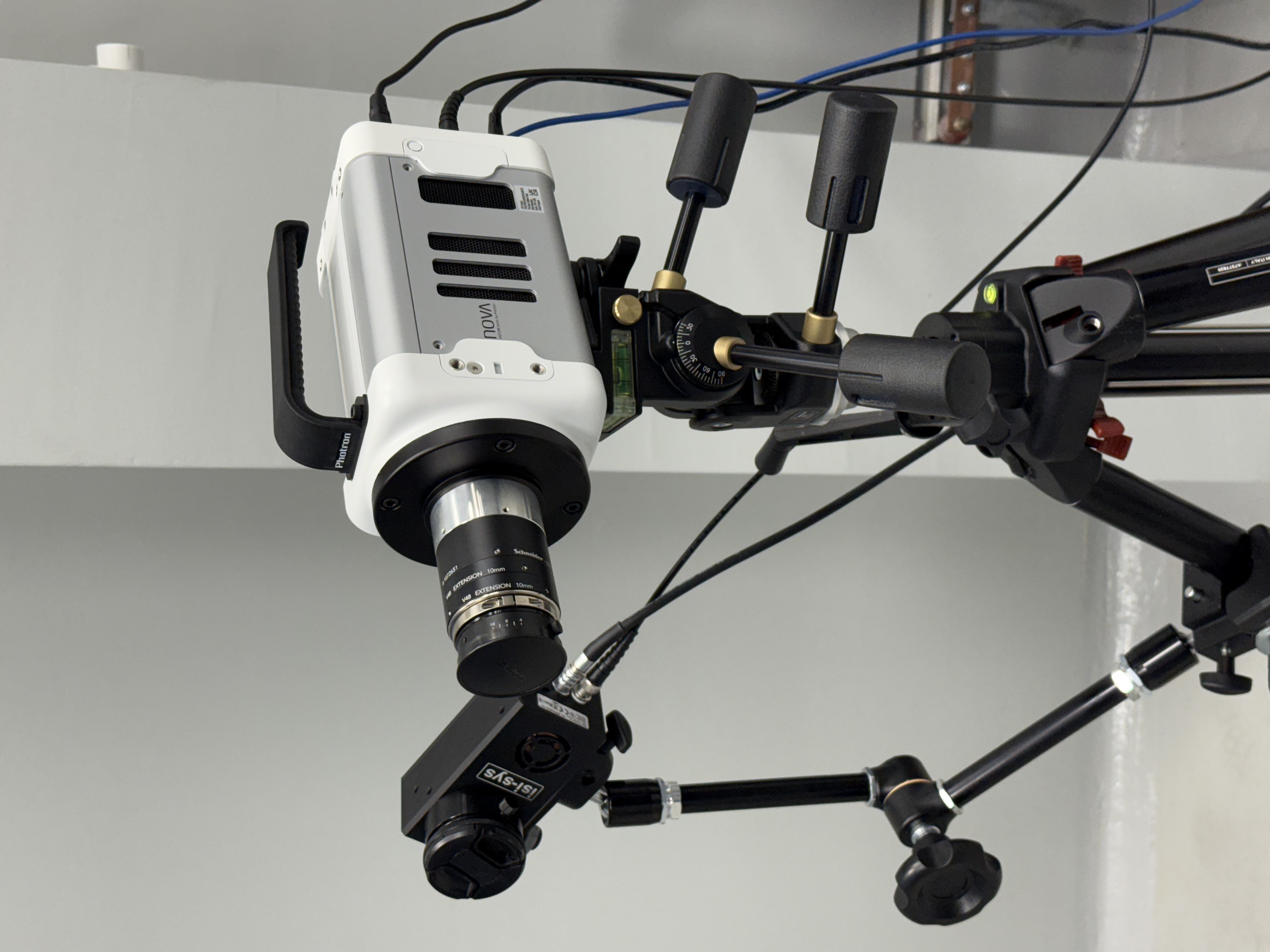
Figure 4. High-Speed Camera