Klingelnberg P26 Precision Measuring Center
As ODTÜ DİMER, we serve the industry and academia with the Klingelnberg P26 Precision Measuring Device, which offers the latest innovations in gear measuring technology. This system is designed to measure dimensional, form, and position deviations of a wide range of workpieces, from gears to rotor shafts, with micron-level precision. Capable of measuring workpieces up to 260 mm in diameter and 80 kg in weight with a resolution of ±0.01 µm, the P26 minimizes the margin of error by offering fully automatic measurement processes with its CNC-controlled system.
Measurement Capacity:
- Workpieces up to 260 mm in diameter and 80 kg in weight
- Vertical measuring range: 400 mm (Optionally 550 mm)
- Horizontal measuring range: ±75 mm
High Precision:
- Measurements can be performed with ±0.01 µm resolution.
- Digital deviation measurement is performed in three axes thanks to 3D NANOSCAN technology.
Automation and Software:
- Fully automatic measurement process with CNC-controlled system
- Measurement data can be instantly transferred and analyzed via LAN connection.
Durable and Stable Structure:
- Its cast iron body ensures long-term mechanical stability.
- Measurement errors caused by temperature are minimized thanks to integrated temperature sensors.
Application Areas:
- Gear measurement and quality control processes
- Part verification for automotive and aerospace industries
- Micron-level measurement needs in R&D projects
At our center, the following measurements and analyses can be performed by expert academicians and researchers in the field:
-
Gear measurements: Tooth profile, curvature, helix angle, and flank roughness measurements
-
Crankshaft and camshaft measurements: Axis deviations and rotational precision checks
-
Rotor measurements: Rotor imbalances and geometric accuracy analyses
-
Axial symmetry analyses: Detection of dimensional, form, and position deviations
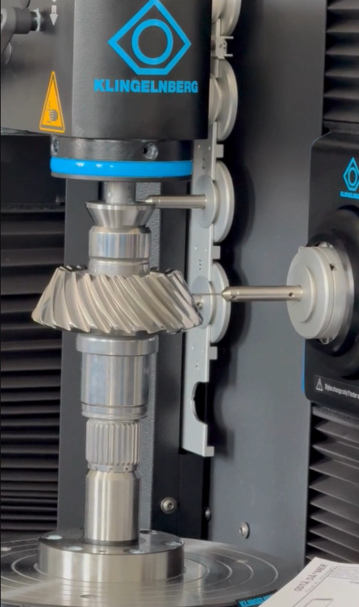
Figure 1. Klingelnberg Measuring Device
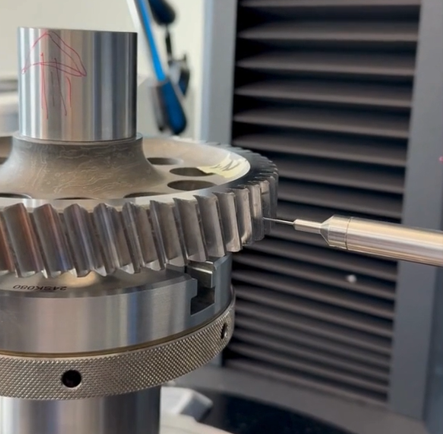
Figure 2. Klingelnberg while measuring
DSX 2000 Digital Microscope
The digital microscope infrastructure within our center provides technical competencies and measurement capabilities in surface analysis processes:
Surface Wear and Failure Analysis
- Detection of Fatigue Initiation Site: Precise detection at the micron level of the root cause (material defects, surface processing errors, or stress concentrations) where the crack originated in dynamic components.
- Crack Propagation Mechanism Analysis: Characterization of the crack propagation rate and the load conditions causing the damage by examining microscopic fatigue striations on the fracture surface.
- Surface Roughness Analysis: Non-contact measurement of surface roughness values such as Ra and Rz (compliant with ISO standards).
- Precision Wear Measurement: High-resolution imaging of material loss resulting from sliding or rolling contact and measurement of wear depths.
- Failure and Root Cause Analysis: Fracture, wear, and corrosion analyses in electronic boards, metal parts, and composite materials.
Surface Treatment and Quality Control
- Heat Treatment and Coating Inspection: Verification of the integrity of surface hardening layers formed after processes such as carburizing or nitriding, microstructure changes, and potential post-process cracks.
- 3D Geometric Verification: Quantitative comparison between the physical state of the specimen and design data by performing Z-axis (depth/height) measurements on surface pits, surface forms, or damage zones..
- Precision Dimensional Measurement: 2D (length, angle, area) and 3D (volume, height difference) measurements.
Imaging Technologies and Device Capabilities
- High Magnification Capacity: Examination of details at the micron level with 20x optical and up to 7300x digital magnification.
- Flexible Imaging: Viewing hard-to-reach surfaces and complex geometries from different angles without the need to move the specimen, thanks to the 180-degree tilting head structure.
- Panoramic Imaging: Creation of wide-area, high-resolution maps via automatic stitching (Image Stitching) of images scanned at high magnification.
- Depth Composition (Focus Stacking): Obtaining completely sharp (focused) 3D models by combining images taken at different focal planes.
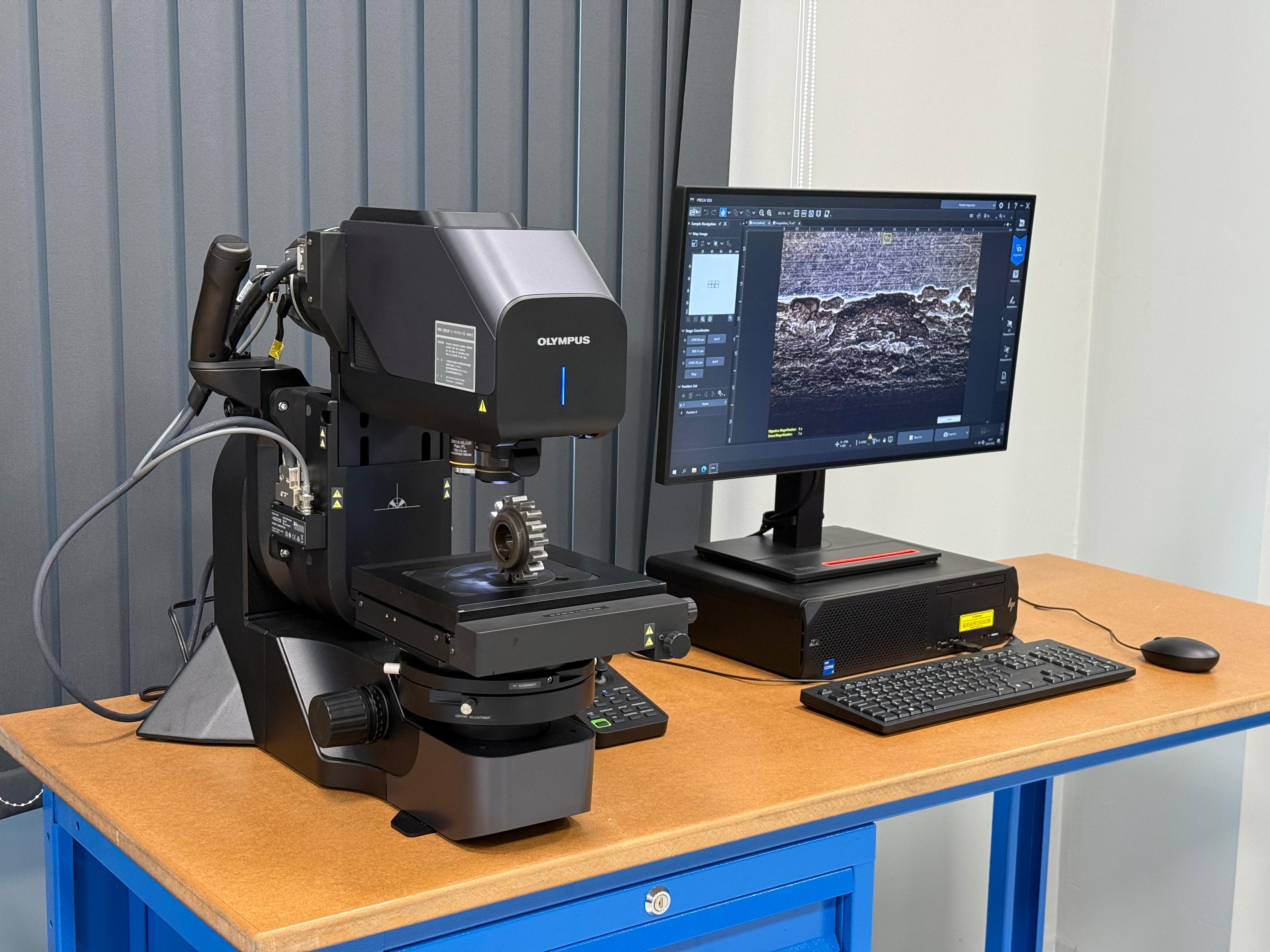
Figure 3. DSX 2000 Digital Microscope
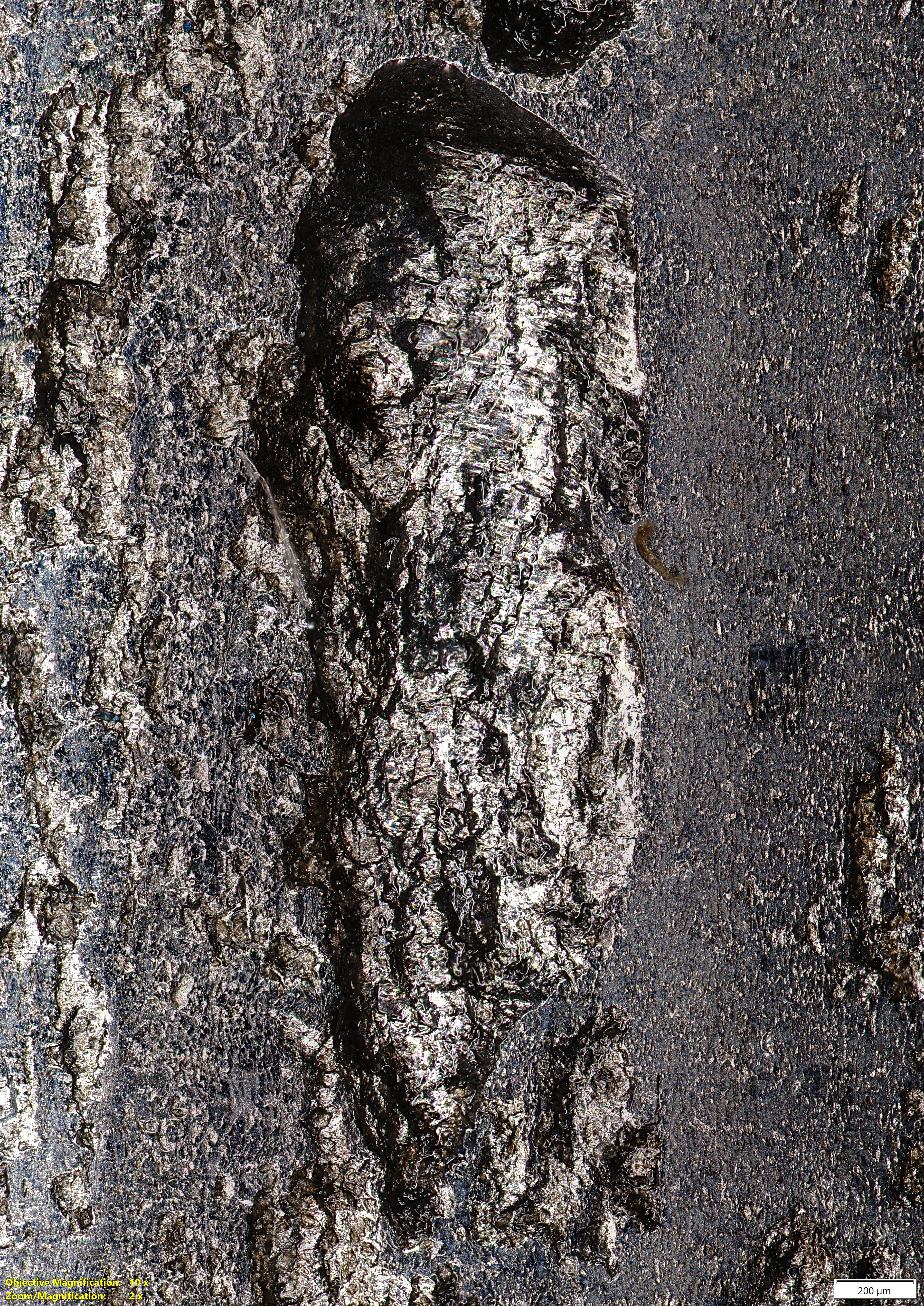
Figure 4. Microstructural Features of the Sample Surface